Satoshi Nakamoto
Who Is Satoshi Nakamoto
The person who designed Bitcoin and released its first code disappeared in 2011, leaving behind only the pseudonym "Satoshi Nakamoto." The early bitcoin he mined has not moved even once in over 15 years, and the search for his identity continues to this day. This page separates confirmed facts from speculation.
Confirmed facts: only code and writing were left behind
On October 31, 2008, a person using the name Satoshi Nakamoto published a nine-page whitepaper, "Bitcoin: A Peer-to-Peer Electronic Cash System," on a cryptography mailing list. On January 3, 2009, he created the first block (the genesis block), embedding in the coinbase data that day's The Times headline: "The Times 03/Jan/2009 Chancellor on brink of second bailout for banks." This is interpreted as a statement about the financial-crisis bailouts.
Over the next roughly two years, he personally maintained the Bitcoin source code and left hundreds of posts on forums (such as Bitcointalk) and via email. After posting on the forum for the last time in December 2010, he handed development responsibility to Gavin Andresen, and in April 2011 he sent an email saying he had "moved on to other things" before ceasing all public activity.
That is where confirmed facts end. His nationality, age, gender, and even whether he is a single individual or a group have never been established. Early writings contain British English spellings ("colour," "bloody hard") and citations of British newspapers, which have prompted speculation about a UK connection, but this remains circumstantial. There is no case in which Satoshi's identity has been legally or technically confirmed.

No real photo or portrait of Satoshi exists. This image is a conceptual illustration of anonymity itself, not a depiction of any specific person.
The only verifiable traces Satoshi left are code commits, forum posts, and emails. Dates follow public records.
| Date | Event | Note |
|---|---|---|
| 2008-08-18 | bitcoin.org domain registered | Preparation before public release |
| 2008-10-31 | Whitepaper published | 9-page paper posted to a cryptography mailing list |
| 2009-01-03 | Genesis block mined | The Times headline embedded in the coinbase |
| 2009-01-12 | 10 BTC sent to Hal Finney | The first bitcoin transaction |
| 2010-12-12 | Last forum post | Public activity drops sharply afterward |
| 2011-04-23 | Last email | "Moved on to other things" — silence follows |
Holdings: about 1.1 million BTC, unmoved for 15 years
Satoshi's holdings are estimated not because a list of wallets has been published, but through pattern analysis of early mined blocks. In 2013, researcher Sergio Demian Lerner discovered that the ExtraNonce values in early blocks increased in a sawtooth pattern unique to a single miner. This pattern is called "Patoshi," and the total block rewards from those blocks come to roughly 1.1 million BTC.
The estimate ranges from 900,000 to 1.1 million BTC depending on the analysis method. This represents about 5% of the total 21 million BTC supply, and at 2025 prices translates to well over $100 billion. If this were ever actually sold on the market, it could deal a considerable shock to circulating supply — so the fact that this supply is 'unmoving' has itself become a premise the market relies on.
The key point is that these coins have never been transferred even once since being mined in 2009. The often-cited exception, the 10 BTC test transaction sent to Hal Finney on January 12, 2009, is treated separately from the Patoshi supply. Lost-coin statistics also treat Satoshi's holdings as a separate category, since it cannot be declared permanently lost, but is also hard to treat as circulating supply.
The upper-end estimate (of 0.9–1.1M BTC) from Patoshi pattern analysis, compared with other large holdings. All figures are estimates, not confirmed.
- Est. Satoshi holdings (Patoshi)1,100,000 BTC · ~5.2%
- Est. permanently lost (excl. Satoshi)2,500,000 BTC · ~11.9%
- Total spot ETF holdings (ref.)1,250,000 BTC · ~6.0%
Candidates the press has focused on, and why none are confirmed
The longest-discussed candidate is Hal Finney, the first recipient of a bitcoin transaction and the creator of Reusable Proof of Work (RPOW), whose writing style and technical background overlapped with Satoshi's in some analyses. However, he denied being Satoshi himself and died in 2014, and evidence of timing mismatches was presented, such as records of him participating in a marathon during a period when Satoshi was active.
Nick Szabo, who designed "bit gold" before Bitcoin, has repeatedly come out on top in several stylometric studies comparing writing similarity to the whitepaper. He has repeatedly denied being Satoshi. Dorian Nakamoto was named by Newsweek in 2014, but he and his family immediately denied it, and the Satoshi account itself posted a message saying "I am not Dorian Nakamoto," effectively ruling him out.
Craig Wright has claimed to be Satoshi since 2016, but in March 2024 the UK High Court ruled in the COPA v. Wright case that he is not Satoshi, finding that the evidence he submitted had been forged. This ruling is the only explicit conclusion a court has reached in this debate. Other figures who have drawn media attention without any verification include those mentioned by Gavin Andresen, the deceased-person theories around Len Sassaman and David Kleiman, and Peter Todd, named by a 2024 HBO documentary (who denies it).
The only decisive proof of identity would be signing with, or moving coins from, the private keys of the early blocks. That has not happened in 15 years. In short, 'unconfirmed' is the accurate description of Satoshi's identity at present, and media reports naming specific individuals remain a mix of circumstantial inference, denials, and legal rebuttals.
Individuals named by media and researchers, their basis, and current status. Craig Wright is the only case with a court ruling.
| Person | Basis | Current status | Verdict |
|---|---|---|---|
| Hal Finney | First bitcoin recipient, RPOW developer, similar writing style and technical background | Denied it himself · died 2014 · timezone-mismatch evidence | Unconfirmed (largely ruled out) |
| Nick Szabo | Designer of "bit gold"; top stylometric similarity | Repeatedly denied | Unconfirmed |
| Dorian Nakamoto | Named by Newsweek in 2014 (real name, residence) | Denied by him and family; the Satoshi account itself posted a denial | Ruled out |
| Craig Wright | Has claimed to be Satoshi since 2016 | UK High Court ruled in 2024 he is not Satoshi; found evidence fabricated | Refuted by court ruling |
| Peter Todd | Named by a 2024 HBO documentary | Denied it himself; only circumstantial inference | Unconfirmed |
| Other hypotheses | Len Sassaman, Dave Kleiman, a developer-group theory, etc. | No verifiable evidence | Unconfirmed |
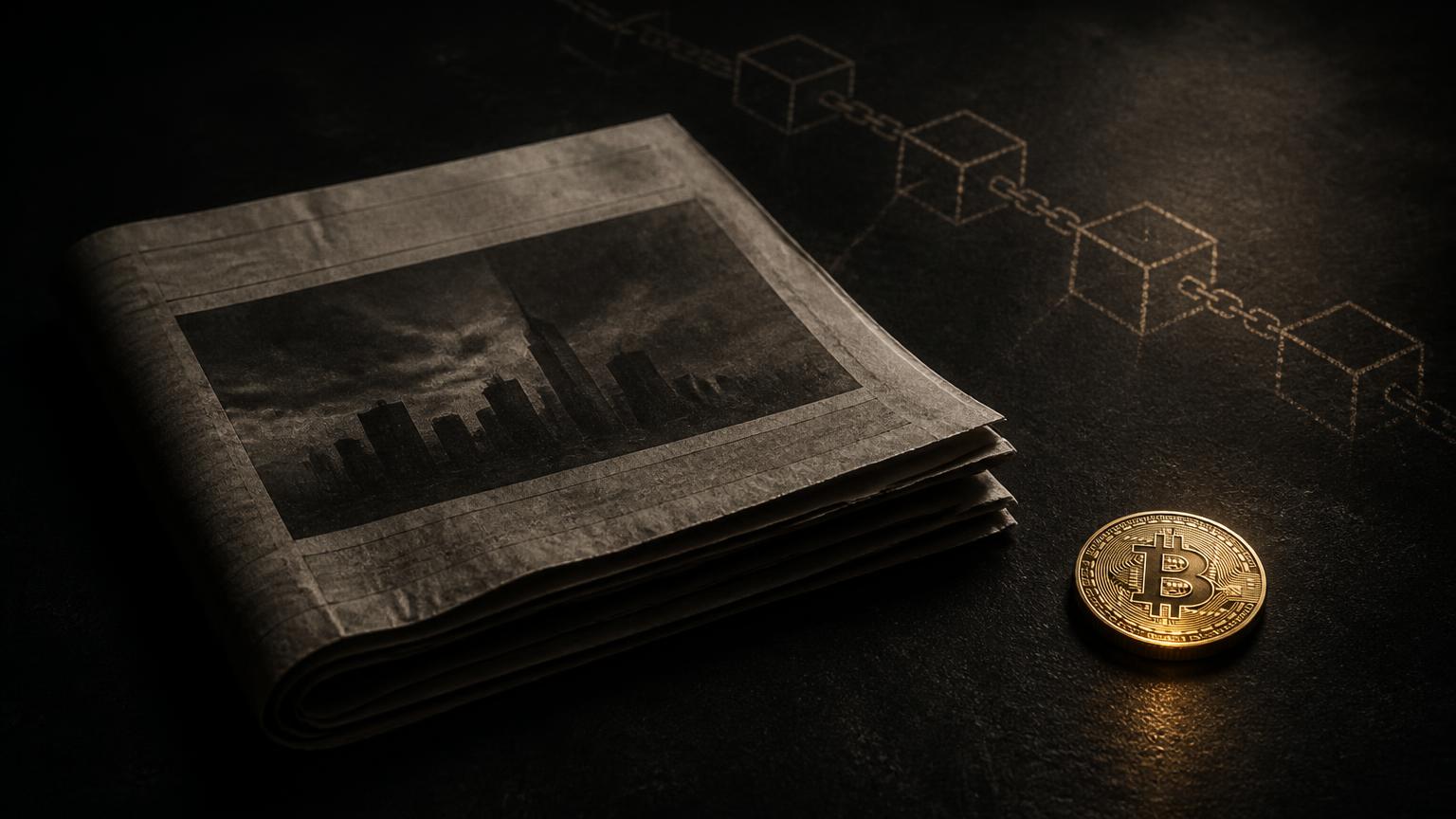
The coinbase of the first block on Jan 3, 2009 recorded that day's front-page headline from the British newspaper The Times. The actual block data can be verified via the mempool.space link in the sources. (Conceptual illustration)
There is no way to confirm identity other than signing with, or moving coins from, the private keys of the early blocks.
The structural significance of anonymity for Bitcoin
The fact that the creator is anonymous and absent has itself become a design feature of Bitcoin. Because there is no final authority to approve protocol changes, changes can only occur through the consensus of miners, nodes, developers, and users — in contrast to other projects where a single statement from a founder can shake price and roadmap.
On the regulatory side, the absence of a specific issuing entity is cited as one basis for Bitcoin being classified as a commodity rather than a security in various countries. This structure also underlies why the U.S. Commodity Futures Trading Commission (CFTC) and SEC treat Bitcoin differently from other crypto assets.
At the same time, risk remains. The theoretical possibility that Satoshi's holdings could move at any time has never been eliminated, and the event of his identity being revealed could itself shock market sentiment. The figures on this page are estimates and are not a basis for investment decisions.
Sources & references
- Bitcoin: A Peer-to-Peer Electronic Cash System (whitepaper) ↗
The original whitepaper published October 31, 2008.
- Sergio Demian Lerner — The Patoshi Pattern ↗
Research estimating Satoshi's mined supply through analysis of early block ExtraNonce values.
- Satoshi Nakamoto Institute — Letters and forum post archive ↗
A collection of the original emails and forum posts left by Satoshi.
- COPA v Wright — UK High Court ruling (2024) ↗
The ruling finding that Craig Wright is not Satoshi.
- mempool.space — Genesis block ↗
You can directly verify the Times headline embedded in the coinbase.