Bukele announces legal-tender plan
In a video message to the Bitcoin 2021 conference in Miami, Bukele revealed plans to submit a legal-tender bill.
Reuters report ↗El Salvador
El Salvador was the first country to adopt bitcoin as legal tender. Why it did so, how the experiment unfolded, and where things stand now — organized with official sources.
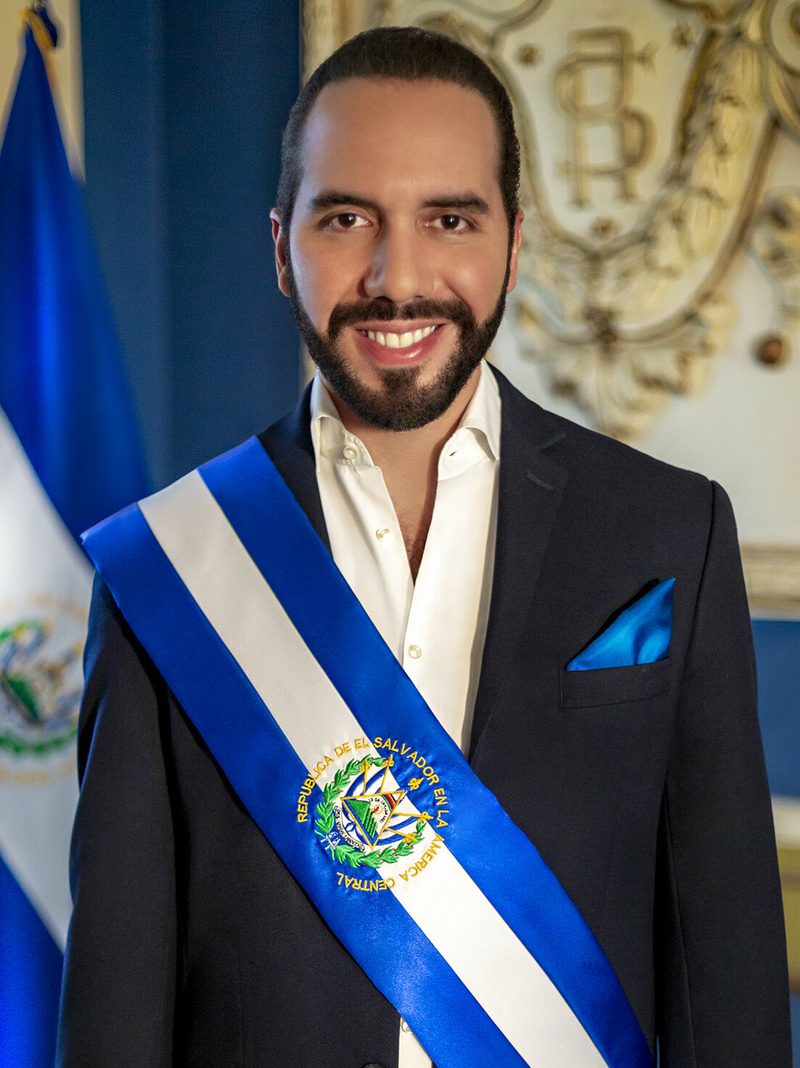
El Salvador has been fully dollarized since 2001, using the US dollar as its only official currency. Dollarization brought price stability but no monetary-policy autonomy, and remittance fees weighed heavily on the economy. Remittances from migrant workers accounted for more than 20% of GDP, and a large share of adults (estimated at around 70% at the time) had no bank account.
President Nayib Bukele announced the plan in June 2021 with three stated goals: cutting remittance fees, bringing financial services to the unbanked, and attracting foreign investment and 'Bitcoin tourism'. The government launched the official Chivo wallet and credited new users with $30 worth of bitcoin.
On June 9, 2021, El Salvador's congress passed the Bitcoin Law in just three days, powered by the ruling party's supermajority. The law recognized bitcoin as legal tender alongside the dollar, obliged businesses to accept it, and allowed taxes to be paid in bitcoin. When it took effect on September 7, 2021, El Salvador became the first country in the world to adopt bitcoin as legal tender.
Launch day brought Chivo server outages and street protests in San Salvador. The government pressed on with announcements: a planned 'Bitcoin City', geothermal 'volcano mining', a proposed 'volcano bond', and treasury bitcoin purchases — including a declared 'one bitcoin a day' program starting in November 2022.
The experiment changed course under pressure from the International Monetary Fund. During loan negotiations the IMF demanded that bitcoin-related risks be scaled back, and in January 2025 congress reformed the Bitcoin Law: accepting bitcoin became voluntary for businesses and tax payments in bitcoin ended. In February 2025 the IMF approved a $1.4 billion Extended Fund Facility whose conditions include limits on public-sector bitcoin activity.
Since the reform, bitcoin is no longer mandatory legal tender — it is a voluntary means of payment. The government says it continues to buy bitcoin, but the IMF has noted that transfers between government wallets can make holdings appear to grow without new purchases. Actual usage by citizens remains low: local surveys report single-digit shares (estimated) of people using bitcoin for everyday payments.
In short, El Salvador's experiment left the symbolic legacy of the world's first legal-tender adoption, but fell short of its original goals on remittances and financial inclusion, and its legal-tender status was effectively rolled back under IMF pressure. The government's bitcoin holding strategy and investment-promotion efforts continue.
Status after the January 2025 legal reform and the IMF program, item by item. Government-reported figures are marked as estimates.
| Item | Current status |
|---|---|
| Legal-tender status | Mandatory acceptance repealed in January 2025 — voluntary private use only |
| Tax payments | Bitcoin tax payments ended; dollars only |
| Government holdings | Around 6,100 BTC (estimated, per government statements) — whether new purchases continue is disputed |
| Citizen usage | Single-digit share (estimated) use bitcoin for everyday payments; most use cash dollars and banks |
| IMF program | $1.4B EFF in effect — conditions limit public bitcoin activity |
In a video message to the Bitcoin 2021 conference in Miami, Bukele revealed plans to submit a legal-tender bill.
Reuters report ↗The law passed with 62 of 84 votes, three days after the bill was made public.
Reuters report ↗The law came into force with the launch of the Chivo wallet. Launch day saw server outages and protests.
AP report ↗Plans were announced for a volcano-geothermal-powered Bitcoin City and a $1 billion 'volcano bond'. The bond's issuance was repeatedly delayed.
Reuters report ↗Bukele declared the treasury would buy one bitcoin every day. Independent verification of actual purchases remains difficult.
Reuters report ↗To seal the IMF deal, congress made bitcoin acceptance voluntary for businesses and ended tax payments in bitcoin.
Reuters report ↗The 40-month program includes conditions limiting public-sector bitcoin purchases and issuance, and scaling back public involvement in Chivo.
IMF press release ↗Government-reported figures (holdings, purchase program) are marked 'estimated' where independent verification is difficult. This page summarizes facts about a national policy; it is not an evaluation and must not be used as a basis for investment decisions.